Why You Don't Know That You Need MediaWiki
Most organizations think they're managing knowledge just fine. You don't realize the problem until you experience the alternative.
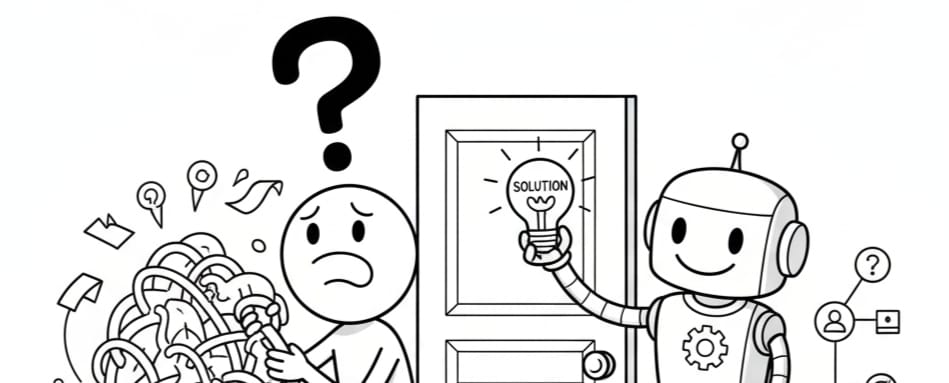
The Knowledge Management Problem You Didn't Know You Had
Most organizations think they're managing knowledge just fine. They have file servers, Share Point sites, Confluence spaces, and endless Slack channels. Documents get created, shared, and eventually buried. Information exists somewhere, but finding it requires tribal knowledge about where to look.
You don't realize the problem until you experience the alternative. Companies that started looking into Semantic MediaWiki as a knowledge base system about a year ago were so successful with it after just a few months that they never looked back. They discovered something they didn't know they were missing.
What Changes When Knowledge Becomes Queryable
Traditional knowledge management stores documents. Semantic MediaWiki stores relationships. Every piece of information connects to every other relevant piece automatically. Semantic MediaWiki ensures information connectivity by seamlessly linking pages and data, creating a web of knowledge rather than isolated islands of information.
Consider a simple example: documenting your software systems. In a traditional wiki, you might have separate pages for each application, database, and server. In Semantic MediaWiki, you define properties like "runs on," "connects to," and "maintained by." Suddenly, you can ask questions like:
- Which applications will be affected if this server goes down?
- What databases need updates when we migrate to the new platform?
- Which systems haven't been updated in the last six months?
These aren't hypothetical queries. Companies that use SMW internally. They discovered that answering complex organizational questions becomes trivial when your knowledge base understands relationships.
The "Multiple Tools" Realization
The breakthrough moment often comes when teams realize they're building multiple applications within a single platform. It provided us with both flexibility and ease of use and allowed us to develop several applications within the same wiki: Usually, these would have required the purchase of several tools, with different licensing schemes, and the development of a lot of integration software to make them work together.
What starts as documentation becomes:
- Asset management system
- Project tracking dashboard
- Compliance audit tool
- Training resource center
- Process workflow engine
Each "application" shares the same underlying data model, so information flows naturally between functions. Your project documentation automatically links to the systems it affects, the people involved, and the compliance requirements it satisfies.
Enterprise Architecture's Secret Weapon
Semantic MediaWiki offers a flexible, queryable alternative to traditional EA repositories by embedding structured relationships within familiar wiki pages. Enterprise architects spend enormous effort maintaining complex diagrams and documentation that become outdated the moment they're published.
With semantic properties, your architecture documentation becomes self-maintaining. When someone updates a system's database connection, every related diagram updates automatically. Business process documentation stays synchronized with the applications that support it. Knowledge is the most important and valuable asset for enterprises second only to their persons, but most organizations can't access their own architectural knowledge effectively.
The Personal Discovery
Individual users have their own revelation moment. They start using MediaWiki for simple documentation and gradually discover semantic markup. Suddenly, their personal knowledge base becomes intelligent.
A consultant tracking client projects realizes they can query which clients use specific technologies, or which projects involve similar challenges. A researcher discovers they can automatically generate literature reviews based on tagged topics and methodologies. A developer finds they can track which libraries are used across projects and identify security update requirements.
The pattern is always the same: people don't know they need queryable knowledge until they experience it.
Why Semantic Capabilities Remain Hidden
Most MediaWiki evaluations focus on basic wiki functionality and comparison with traditional documentation tools. Organizations test editing, formatting, and user management. They miss the semantic layer entirely because it's not obvious from surface features.
Semantic MediaWiki requires a different mindset. Instead of thinking "How do I document this?", you think "What relationships does this information have?" The shift from document-centric to relationship-centric thinking opens possibilities that weren't visible before.
Here's a simple example that demonstrates the difference:
Traditional approach:
Page:
Web Server 01

Content:
This server runs Apache 2.4 and hosts our main website. It connects to Database Server 02 for user data. Maintained by: John Smith
Semantic approach:
Page: Web Server 01

[[Server type::Web Server]]
[[Runs software::Apache 2.4]]
[[Hosts::Main Website]]
[[Connects to::Database Server 02]]
[[Maintained by::John Smith]]
[[Purpose::User data access]]
The semantic version enables automatic queries like "Show me all servers John maintains" or "Which systems will be affected if Database Server 02 fails?" The traditional version requires manual searching and human interpretation.
The Implementation Surprise
All these tools only required a little bit of training and about 25% of the time of a single developer for a year, on a single platform. Organizations expect knowledge management implementations to be complex, expensive, and disruptive. They budget for enterprise software licenses, consulting engagements, and months of user training.
Semantic MediaWiki implementations often succeed precisely because they start small and grow organically. Teams begin with basic documentation, add semantic properties incrementally, and discover new capabilities as they evolve their information model.
The learning curve is gentler than expected because users can continue working in familiar wiki editing while gradually adopting semantic markup. Unlike enterprise software that requires wholesale process changes, Semantic MediaWiki adapts to existing workflows while enhancing them.
When the Light Turns On
The transformation typically happens around the three-month mark. Users have populated enough content with semantic properties that queries start returning meaningful results. Someone runs a report that would have taken hours of manual research and gets instant results. The "aha moment" spreads as people realize their documentation has become intelligent.
We use MediaWiki and Semantic MediaWiki as a base for our collaboration platform as the main business of our company is creating laws and legislative acts editing systems. We also use MediaWiki for two other important tasks: creating forecasts, strategic foresights and professional standards. Organizations discover they can apply semantic principles to problems they hadn't considered wiki-appropriate.
You don't know you need MediaWiki until you realize that your knowledge has relationships that traditional tools can't capture. Once you experience queryable knowledge, going back to static documentation feels like returning to filing cabinets after using search engines.
The question isn't whether your organization needs better knowledge management. The question is whether you're ready to discover what your knowledge could become when it understands itself.